From Automation to Emotion: The Next Skill in Design and Project Work
Automation wins you time. Emotion wins you the client. After years of building workflows and delivering fit-outs, I now believe the second skill matters more. This post explains why, and how I’m learning to manage for it.
Why I Started Thinking About Emotion
I spend a lot of my week inside automations. I build n8n workflows that research keywords, rewrite content, and log everything to Google Sheets. I’ve written about AI task assignment in project software and automated deal-to-project handoffs. I enjoy this work. It removes friction. It gives me back hours.
Then one evening I was reviewing photos from an old fit-out project. Office interiors I coordinated years ago in Nairobi. Corporate clients, tight programmes, long snag lists. I remembered none of the schedules. I remembered the handover days. The moment a client walks into a finished space for the first time and goes quiet. That silence is the product. Everything else was process.
That contrast stayed with me. My automations are getting better every month. My question changed: better at what, exactly?
What Does “From Automation to Emotion” Mean?
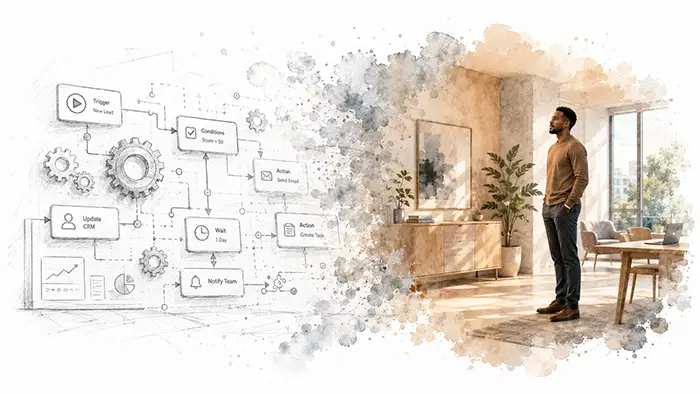
It means the repetitive layer of our work is being absorbed by machines, so the human layer becomes the differentiator. In interior design, the human layer is how a space makes people feel. In project management, it’s how the journey makes stakeholders feel.
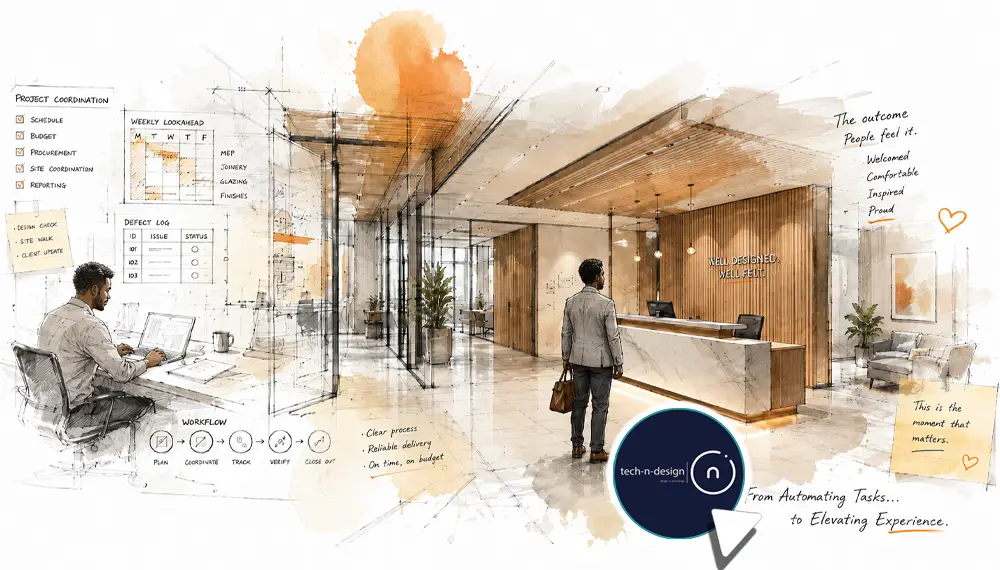
Think about what automation already covers on a typical fit-out project. Scheduling. Procurement tracking. Defect logging. Follow-up emails to subcontractors. Progress reports. I’ve built versions of most of these myself. Predictive AI is now forecasting delays and maintenance issues before humans spot them.
None of that tells you whether the receptionist feels proud sitting at the new front desk. None of it tells you whether the project sponsor felt heard when the budget conversation got hard. Those outcomes decide repeat business. Those outcomes decide referrals.
What Automation Solved on My Projects
I want to be fair to automation, because it earned its place.
It removed the chasing
On fit-out projects, I used to spend hours chasing subcontractors on open defects. Who received the snag? Did they respond? Did anyone follow up after 48 hours? I later designed an n8n workflow that does exactly this: log the defect, email the subcontractor, escalate if silence. The machine chases. I decide.
It removed the reporting grind
Weekly progress reports used to eat my Friday afternoons. Pulling data, formatting, sending. Automation turned that into minutes. The report still needs my judgement. The assembly no longer needs my time.
It raised the baseline for everyone
This is the uncomfortable part. When every coordinator can automate the routine work, routine competence stops being a selling point. I made this argument in Is being fluent in AI a must for project managers. Fluency gets you to the starting line. It no longer wins the race.
Where Emotion Enters the Design Process
Here in the Netherlands, researchers at TU Delft have spent two decades studying this exact question. The Delft Institute of Positive Design researches how design can support human flourishing, not only function. Their work treats emotion as something you can design for deliberately, with structure and evidence. That reframing matters for practitioners like us. Emotion stops being a vague “wow factor” and becomes a design requirement you can plan, test, and deliver.
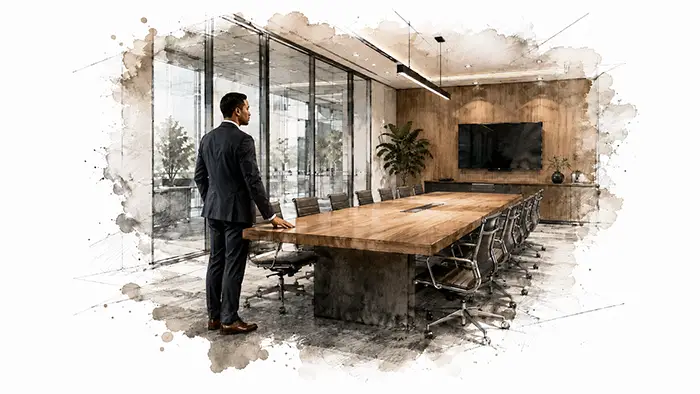
I’ve seen this play out on site. On one office project, the design brief said “modern and professional.” What the client actually wanted was for visiting partners to feel the company had arrived. Same drawings, different target. Once we understood the emotional target, decisions got easier. Reception lighting, the material on the boardroom table, the view from the waiting area. Every choice had a test: does this move the feeling forward?
AI is already reshaping interior design jobs. It generates layouts, renders options, and analyses space usage. I use AI tools in my own arch-viz workflow and they’re impressive. What they can’t do is sit with a client, read the hesitation in their voice, and figure out that “modern” means “we want to feel like we’ve arrived.” That translation is the job now.
How Do You Manage for Emotion as a Project Coordinator?

This is where I’m putting my energy. Here’s what I practice on projects, and what I’d suggest you try.
Name the emotional outcome in the brief
Ask the client one extra question at kickoff: “When people walk into this space six months after handover, what should they feel?” Write the answer down. Put it next to the budget and the programme. Refer to it at every design review. It’s the cheapest requirement you’ll ever capture, and it settles more disputes than any spec sheet.
Protect human moments from your own automation
Automate the chasing, the logging, the reporting. Never automate the difficult conversation, the site walk with the client, or the handover. I keep a simple rule: if the interaction shapes how someone feels about the project, it gets my face, not my workflow.
Track feelings like you track defects
After each milestone, I ask the client sponsor two questions. What’s working for you? What’s worrying you? Two questions, five minutes, logged in the same sheet as my actions. Worry caught at week 6 is a conversation. Worry caught at handover is a dispute.
Conclusion
Automation took the repetitive work off my desk. I’m grateful for that every week. What it handed back to me is the real job: making people feel something worth remembering, in the spaces we build and the projects we run.
Here’s your one action. On your next project kickoff, ask the emotional-outcome question and write the answer into the brief. Then check every major decision against it. That single habit moves you from automation to emotion.
FAQs: From Automation to Emotion
No. Automation is the entry ticket. It frees the hours you then invest in the human layer. Skip automation and you have no time for emotion. Skip emotion and your automation serves no one.
Yes, imperfectly. Repeat business, referral rate, sponsor check-in notes, and post-occupancy feedback all signal it. The TU Delft research shows emotion can be studied and designed for with rigour. Practitioners can borrow that mindset without the lab.
No. Your subcontractors, your site team, and your suppliers all have an emotional experience of your project. Teams that feel respected flag problems early. That alone pays for the effort.