How Is AI Changing Interior Design Jobs
AI fluency is now a baseline requirement for interior designers. You stay relevant when you combine deep design judgment with clear control over AI tools.
Your career now depends on how well you direct AI across the full project lifecycle, not only on drawing or styling skills.
What does the financial outlook for AI in design look like?
- The market is really taking off! This financial boost is influencing all the trends you notice in job postings and the skills that are in demand.
- The global AI in interior design market is expected to skyrocket from $829 million in 2023 to $7.29 billion by 2033, which translates to a compound annual growth rate (CAGR) of 24.3%. Source: Marketus
This growth is a real boost for job creation. Analysts predict that by 2030, we’ll see a 22% rise in opportunities within the design sector, as new, complex projects take the place of automated tasks.
Companies are turning to AI for a clear reason: to safeguard their profit margins by speeding up operations. They leverage it to enhance project management, improve layout planning, and facilitate better communication with clients.
What new AI-driven roles are emerging?
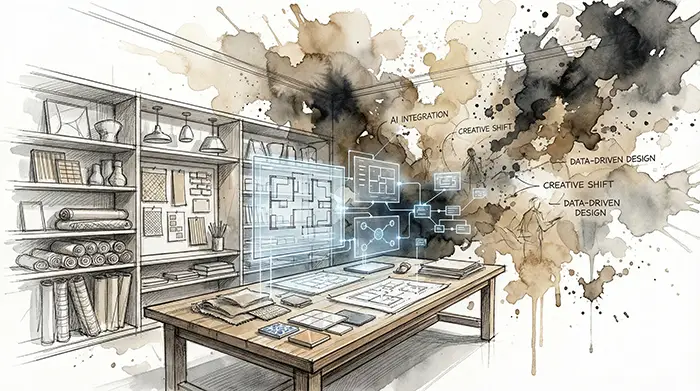
The job market is evolving, blending traditional roles with new, hybrid positions that incorporate fresh tools. There’s a growing demand for technical oversight, which is becoming increasingly valuable.
We’ve also seen a remarkable surge in mentions of AI skills in design job listings, indicating a significant shift in what employers are looking for in their workforce.
- The demand for AI Engineer positions has really taken off, with a strong emphasis on creating and tailoring AI models that are specific to design needs.
- Prompt Engineer roles have also seen a significant rise, focusing on the art of turning design ideas into clear, actionable AI commands.
- AI Content Creator roles are expanding, leveraging AI to craft engaging client presentations and marketing materials.
I’ve noticed that the most attractive salary offers are for positions that combine traditional design skills with the ability to manage AI-generated outputs.
What essential AI skills should designers focus on first?
The skill matrix has undergone a complete transformation. Surprisingly, the top skill for AI roles in 2025 isn’t coding; it’s actually design.
Technical know-how and cloud skills are certainly valuable, but they rest on a solid foundation of design principles. The market clearly prioritizes human judgment, empathy, and creativity to steer AI systems in the right direction.
The Human Check is your highest-leverage competency
AI just can’t capture the emotional side of design like you can. Your true strength lies in understanding emotions and weaving cultural stories into your work. That’s what makes you an essential guide in this field.
Interior Designers are concerned about the accuracy of AI-generated outputs. Our main job is to review, cross-check, and validate every concept, layout, and specification that comes from AI. Keeping a close eye on the inputs helps avoid costly mistakes down the line.
How are designers using AI today?

Right now, we’re in an experimental phase, but it’s definitely focused. Designers are tapping into AI to speed up those early, iterative stages of their projects.
Almost half of the industry (47%) has started using AI for virtual reality modeling. When it comes to applications, visualization is leading the way as the most developed and immediate use case.
- Concept Generation: Designers use AI to rapidly experiment with colour palettes, furniture layouts, and material combinations, presenting multiple options to clients in hours, not days.
- Client Communication: I use AI chatbots and text-analytics tools to draft project updates and refine client communications for clarity.
- Task Automation: The focus is on automating inefficient tasks, like updating product specification lists or generating initial space planning concepts based on core parameters.
What are the real incentives and risks behind AI adoption?
Operational speed is key to making smart investments. If a tool helps you work faster, you must adopt it to remain competitive. But this efficiency isn’t the end goal but it’s the enabler.
With this efficiency, companies can tackle complex, specialized contracts in areas like automotive interiors, luxury airline cabins, or high-end furniture. AI serves as a catalyst for this tailored approach, making it not just possible but also profitable.
Who benefits from your AI data?
Primarily, the AI service providers. When you input a proprietary design into a cloud-based AI, you risk losing control of your intellectual property. This isn’t a theoretical risk, it’s an immediate operational threat.
Your first line of defense is computational governance: the non-negotiable skill of vetting, selecting, and managing secure AI models that protect your work.
How do ‘phygital’ skills change client communication?
Static visuals just don’t cut it anymore when it comes to engaging clients at a high level. The focus has shifted from just physical execution to a more integrated approach that blends the physical and digital worlds, what we like to call ‘phygital’ fluency.
Professional bodies like the IIDA identify this as a profound transformation. Source: IIDA
Digital Twin expertise is non-negotiable
To really excel in your field, you need to get the hang of creating digital twins, those incredibly lifelike virtual replicas of real-world spaces. The market is all about rewarding this kind of immersive storytelling because it allows you to turn AI-optimized models into engaging VR presentations for clients.
When it comes to high-end projects that use pricey materials, even a small mistake in visualizing how textures interact can lead to significant financial losses. That’s where digital twins come in; they offer an instant, precise preview that helps minimize risks for the entire proposal.
Why is it that material complexity calls for improved AI skills?

These days, aesthetic trends are all about warm earth tones, rich textures, and those subtle finishes like pewter and anthracite. Unfortunately, basic AI can only produce bland and often inaccurate representations of these intricate details.
To truly capture these complex requirements, you need some serious skill in crafting prompts. This ability sits at the intersection of traditional know-how and the precision of technology. It’s all about translating specialized knowledge, like understanding how a particular fabric interacts with light, into a clear command for AI. The job market is definitely rewarding this unique blend of expertise.
Conclusion
Set aside time this week to audit your firm’s intellectual property rules. Define exactly which data you can send to third-party AI tools and which data must stay inside your own systems.
That one action forces you to face your main risks and lays the groundwork for real computational governance.
FAQs
No, AI is polarizing the job market. Firms now demand professionals who control AI tools for both efficiency and high-value specialization. Roles focused on repetitive tasks face pressure, while hybrid roles blending design expertise with AI governance are surging.
Intellectual property theft is the existential risk. Inputting proprietary designs into third-party AI tools can compromise your work. This makes computational governance, vetting and managing secure AI models, a mandatory operational skill.
Phygital skills involve translating physical designs into immersive virtual experiences. With 47% of firms using AI for VR modeling, proficiency in creating interactive client presentations through Digital Twins is now non-negotiable for high-stakes projects.
AI-native hybrid roles are seeing explosive growth: AI Engineer (+143.2%), Prompt Engineer (+135.8%), and AI Content Creator (+134.5%). These roles blend technical oversight with creative strategy and command premium salaries.
The Human Check, auditing and verifying AI outputs, is the highest-leverage competency. With 64% of professionals concerned about AI inaccuracy, your ability to cross-reference and validate AI-generated concepts protects projects and justifies premium rates.