

What Should a Weekly Fit-Out Progress Report Include?
A weekly fit-out progress report should show what was planned, what has been completed, what is delayed and which decisions you need next. Include the effect on upcoming work, the current cost position and a named owner for each action.
I recommend putting the most urgent decision near the top. Your client should be able to see what needs their attention without searching through site notes.
What does your client need to know?
Start with the project name, reporting period and author. State the date and time covered by your update. Identify any information received after that point.
Use the opening summary to answer these questions:
- Progress: what finished, and what missed its planned date?
- Effect: which upcoming activity or agreed milestone is affected?
- Decision: what needs approval, from whom and by when?
Follow with upcoming work, delivery problems, changes, costs and open quality or safety actions. Focus on what the client needs to act on, with links to the detail.
Agree the reporting format, recipients and frequency with the project team. Raise urgent safety concerns through the site’s established procedure immediately. Do not wait for the weekly report.
How do you check progress before reporting it?
Compare the work completed with the agreed project programme, meaning the schedule of activities and dates. Keep the original planned position visible alongside the current forecast.
Ask the people responsible for each work area to confirm their update. Check it against site records, delivery notes and inspection records. CIOB’s project-control syllabus includes assessing progress against the master programme and maintaining an accurate site diary.
Describe the stage the work has reached
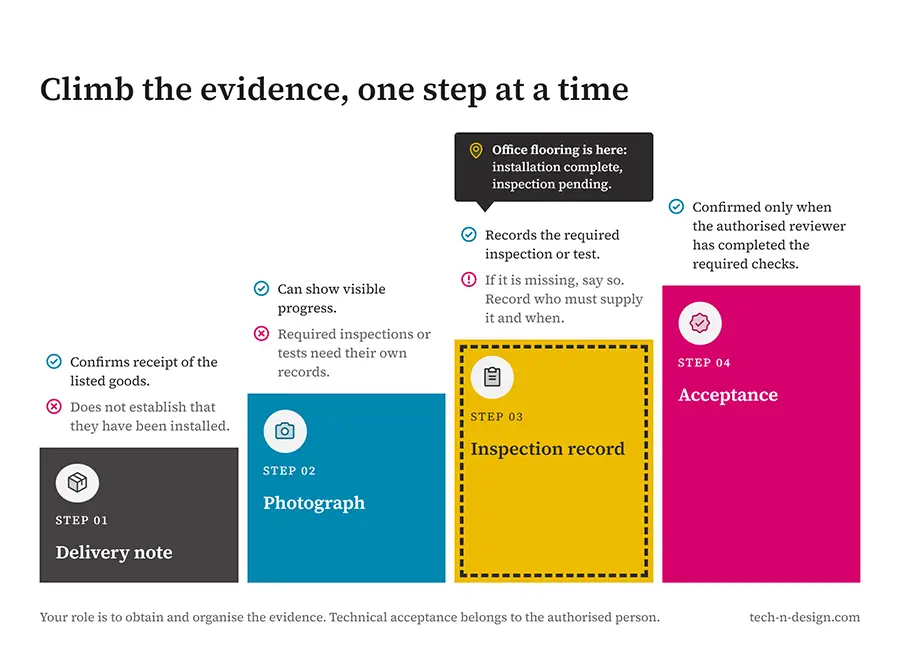
Use specific descriptions such as “materials received”, “installation complete, inspection pending” or “inspection completed, corrections outstanding”. Record the area and the remaining work.
A delivery note confirms receipt of the listed goods. It does not establish that they have been installed. A photograph can show visible progress; required inspections or tests need their own records.
If you report a percentage, state what it measures and how it was checked. Avoid combining delivery, installation and acceptance into an unexplained completion figure.
Make missing information visible
If the contractor says the work is complete and the inspection record is missing, say so. Name the person who must supply it and set a deadline. As coordinator, you bring the evidence together. The authorised reviewer decides if the work meets the technical requirements.
What does a weekly fit-out report look like?
Here is a flooring example showing how a short summary connects to the actions below.
Write the summary first
Reporting cut-off: Friday, 15:00. Flooring installation in the open-plan office reached 80 m² against a plan of 100 m². The remaining 20 m² awaits delivery, which the supplier now forecasts for Tuesday. Inspection of the installed flooring is pending.
The site manager is reviewing Wednesday’s furniture installation. Temporary storage is an option, subject to a cost and handling review followed by client approval. The effect on the project completion date is still being assessed.
Record the actions underneath
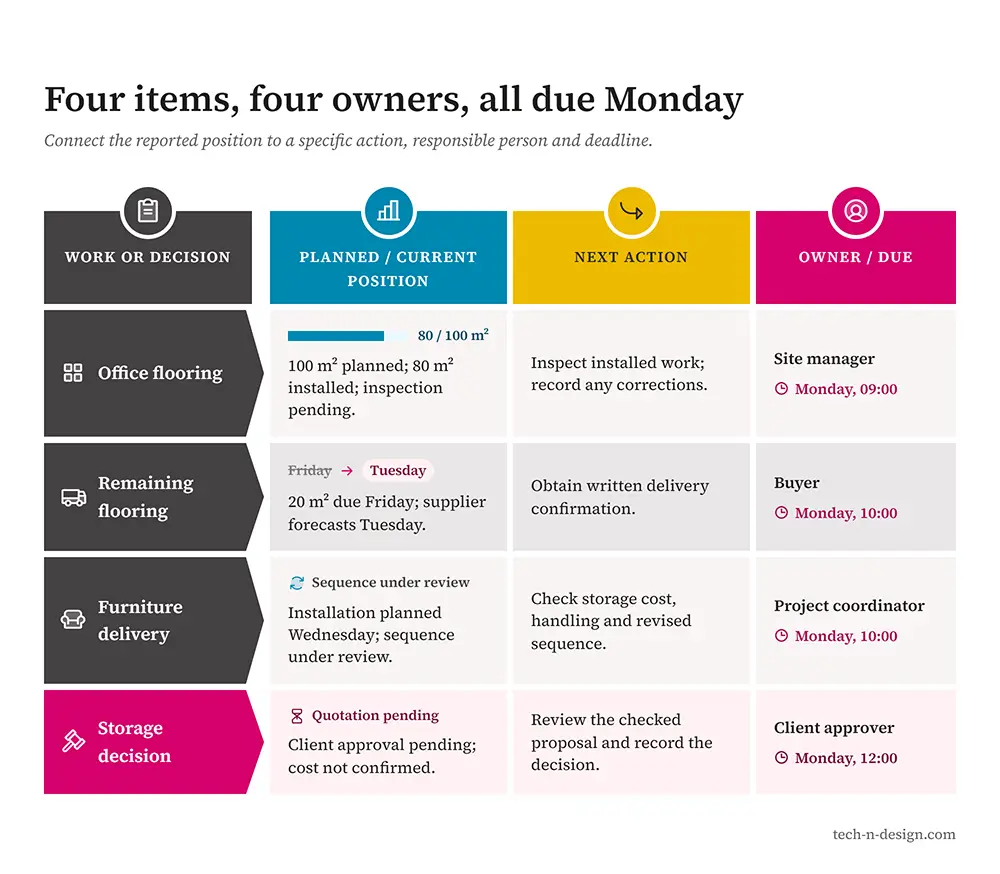
Replace role labels with names and link the supporting documents. Follow up separately on the delivery, inspection and storage decision.
How do you report delays and costs?
Explain the delay, the work it affects and what the team plans to do. Separate confirmed facts from forecasts. Check how the late flooring affects subsequent tasks before revising the project completion date.
For supplier dates and outstanding approvals, refer to your fit-out procurement schedule. Keep its required delivery dates and latest supplier commitments consistent with the weekly report.
Summarise cost information supplied by the person responsible for project costs, such as the quantity surveyor. Show approved changes separately from proposals awaiting a price or decision. Name the source and date of the figures.
Leave the storage cost marked “quotation pending” until the supplier responds. A missing price is not zero. Once reviewed, show the amount, what it covers and who must approve it.
RICS’s construction cost-reporting guidance covers reporting to the client from the quantity surveyor’s perspective. Use the agreed cost report as your reference and refer uncertain financial assessments to its owner.
For a confirmed problem, link to the current issue record and its next action. My guide to managing project risks and issues explains how to record the concern and follow it through.
Which decisions need attention?
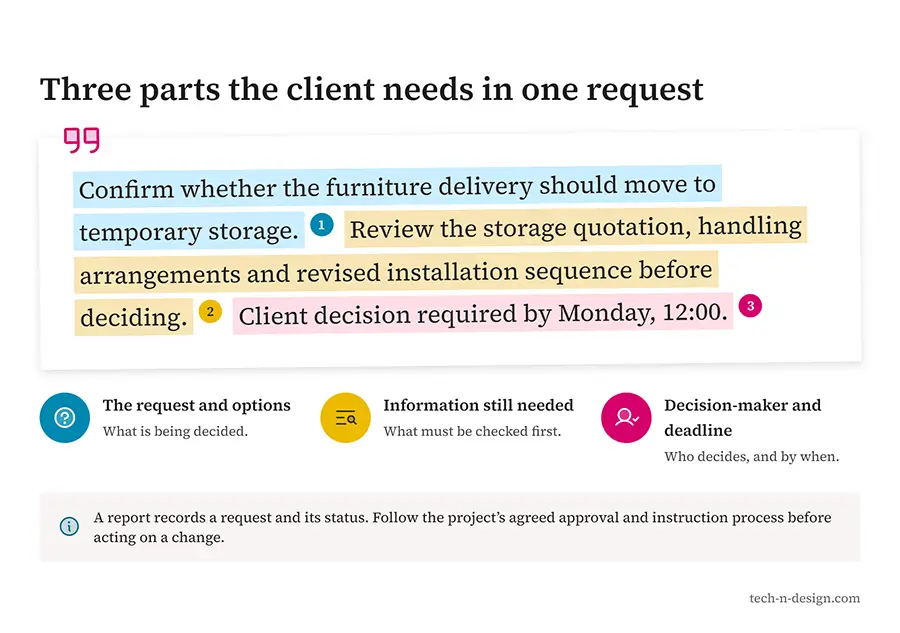
Make each request easy to answer. Set out the options, missing information, person authorised to decide and deadline.
The storage request could read: “Review the quotation, handling arrangements and revised installation sequence. Confirm if the furniture delivery can go to temporary storage. Client decision required by Monday, 12:00.”
Explain what waiting could affect. Verify supplier deadlines and extra charges before presenting them as facts.
A report records a request and its status. Follow the project’s agreed approval and instruction process before acting on a change. My guide to assessing and approving project change requests sets out those steps.
RICS’s guidance on record keeping and regular reporting supports recording actions and tracking them to conclusion. Its cited guidance is UK-specific; agree the reporting and approval requirements for your own project and country.
What happens next week?
List the coming week’s activities and what must be ready for each: materials, approved information, access, people and required inspections.
The flooring delivery and inspection will shape when furniture installation can proceed. Resolve those points with the people doing the work, then agree the sequence. Keep any recovery plan marked as proposed until it has the required approval.
Before issuing the report, check that the dates, action owners and linked records agree. Save the issued version with its reporting period. If you correct it later, identify the revision and tell the recipients what changed.
Where should you start?
Take the most urgent unresolved item from your current project. Record its effect, the decision needed, the person responsible and the deadline. Put that entry at the top of your next weekly report.
FAQs
Explain what prevented progress, which dates are affected and who must act. Include the next step and deadline, even if the position is unchanged.
Describe the difference and ask for supporting evidence. Mark the disputed information as unconfirmed until the responsible person checks it.
Keep separate purposes clear: minutes capture discussions and decisions; the report summarises the project’s current position. Link relevant decisions instead of repeating the meeting.
Ask the responsible people to confirm their sections. Agree who checks the combined update and authorises it for issue.